Contents
- Why a Successful Field Trial Is Not Yet a Market-Ready Product
- Start by Defining the Commercial Claim, Not the Technology
- Read the Trial Record Like an Investor or Producer Would
- Map the Georgia Support Assets Before Building the Go-to-Market Plan
- Convert the Research Result Into a Product Specification
- Validate Buyers, Channels, and First Revenue Paths
- Prepare Regulatory, IP, and Funding Readiness Early
- Run Pilots That Can Become Sales, Not Just Demonstrations
Why a Successful Field Trial Is Not Yet a Market-Ready Product
A good field trial tells me a technology has technical promise. It does not tell me, by itself, that a producer will buy it, maintain it, explain it to a lender, or trust it during a bad week.
That gap matters in Georgia agribusiness because the field is only one part of the business system. Commercialization has to prove repeatable customer value, manufacturability, compliance, distribution, and service. Those are not side issues. They decide whether a useful idea becomes a product someone can rely on.
The January 23, 2009 agribusiness highlight report gives a practical frame for this problem. It pointed to wood pellets tested as poultry-house heat, sweet sorghum studied for ethanol, and bioenergy feedstocks from value-added by-products. Each example starts with a sound technical question. Each one also runs into the same commercial question: can this work under normal operating pressure?
Key Takeaway: A field result reduces technical uncertainty. A market-ready product reduces customer, supply, service, and operating uncertainty.
The gap is economic as much as scientific
I usually start from first-principles theory: what problem is the grower, processor, or integrator actually paying to solve? In poultry housing, heat is not just heat. It touches bird comfort, fuel logistics, ventilation, labor, and risk during cold weather.
For sweet sorghum, the crop question sits inside a processor question. A feedstock that grows well still has to arrive when the plant needs it, in a condition the conversion process can handle, at a cost that makes sense.
Start by Defining the Commercial Claim, Not the Technology
The technology is tempting to lead with. I have learned to resist that temptation.
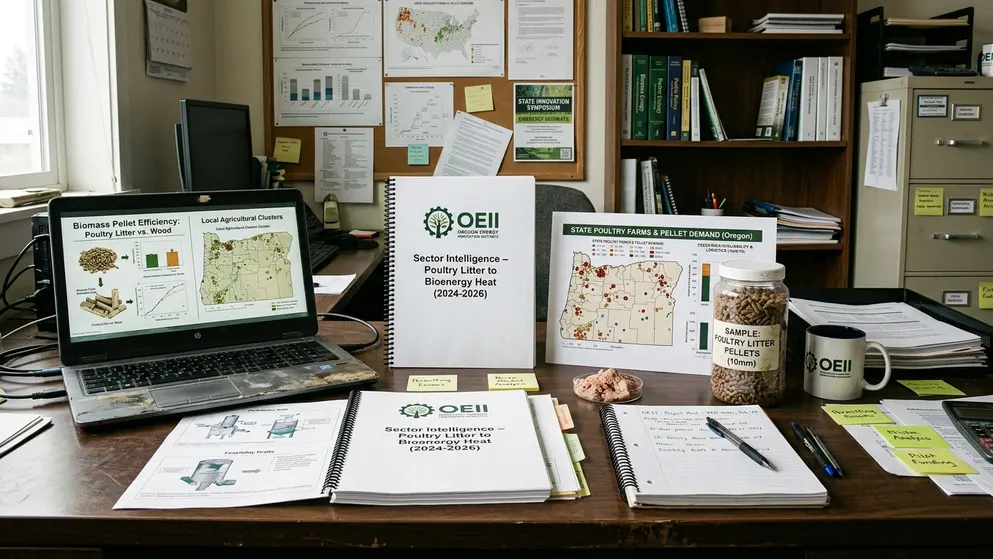
Wood pellets are not simply an alternative fuel. The commercial claim is sharper: practical, lower-risk heat for poultry houses under producer operating conditions. That claim forces better questions. How does the fuel behave in storage? How much training does the grower need? What happens when litter moisture, ventilation, and heater performance all interact?
Turn research topics into hypotheses
Sweet sorghum gives a clean second example. The commercial question is not whether it can grow in a test setting. The question is whether it can become a dependable ethanol feedstock across harvest timing, transport, and processor scheduling.
Grain-based milk alternatives follow the same logic. Deep Organic, as an example, would not sell ingredient capability alone. The company has to translate that capability into taste, processing consistency, labeling, shelf behavior, and buyer acceptance. The product claim becomes something a retailer, distributor, or food-service buyer can evaluate.
A useful claim has boundaries
- Who is the first buyer?
- What operating condition does the product fit?
- What result can the seller support without overreaching?
- What service promise comes with the sale?
That last question often exposes weak commercialization plans. If the seller cannot support the product after delivery, the buyer will treat the field trial as interesting but incomplete.
Read the Trial Record Like an Investor or Producer Would
A producer reads a trial record with a different eye than a researcher. So does an investor. Both want to know whether the result can survive contact with ordinary work.
The details that matter are plain, but they are often buried: location, season, inputs, equipment used, labor requirement, maintenance issues, and the distance between trial conditions and routine farm or processing conditions.
What to look for first
- Location: Soil, climate, humidity, and infrastructure shape transferability.
- Season: Timing can affect yield, storage, pest pressure, drying, or fuel behavior.
- Inputs: A result that depends on special handling may still be useful, but it needs honest costing.
- Equipment: Commercial equipment compatibility matters more than a clever test setup.
- Labor: If the product adds a chore during a busy window, adoption slows.
Warning: Do not turn a controlled plot or demonstration house into a broad statewide claim. A wood-pellet heating result, for instance, may not transfer cleanly if storage humidity exceeds the trial conditions.
The University of Georgia College of Agricultural and Environmental Sciences is a useful economic expert source for producer-facing analysis because it works close to the practical questions that shape farm decisions. Still, even in Georgia, agribusiness adoption turns on local economics, seasonal timing, and buyer tolerance for operational change.
That qualifier is not a retreat. It is how a good claim stays believable.
Map the Georgia Support Assets Before Building the Go-to-Market Plan
Georgia has an innovation support structure that can help, but it works best when a company knows what it needs before asking for help.
The six Georgia Centers of Innovation were created in 2003 during Governor Sonny Perdue’s administration. In the agribusiness lane, that matters because commercialization often requires more than a lab contact. It requires sector knowledge, manufacturing awareness, buyer access, and a practical read on how Georgia’s supply chains actually move.
Use the right door for the right problem
Bill Boone, as Director of the Center of Innovation for Agribusiness, fits into this work as a connector for sector-specific commercialization guidance. That guidance can help an innovator ask better early questions: Is this a farm input, a processing ingredient, an energy product, or a service model?
The Center of Innovation for Manufacturing appearing as a vendor at the Poultry Expo is also telling. Agribusiness commercialization often crosses into equipment, production systems, controls, fabrication, packaging, and supplier networks. A poultry-house heating product is partly an agriculture idea and partly a manufacturing and service problem.
Some questions may also point toward the Georgia Institute of Technology or a Georgia Research Alliance (GRA) relationship, especially when process engineering, materials, sensors, or university-linked intellectual property sit at the center of the product. The key is sequence. Do not build a go-to-market plan first and then look for assets to decorate it. Map the constraints, then find the partners.
Convert the Research Result Into a Product Specification
A research result says, “This can work.” A product specification says, “This is what we will sell, support, and stand behind.”
That conversion is where many agribusiness technologies either become real or stay permanently promising. The specification should define the use case, tolerances, handling requirements, packaging, maintenance needs, service model, and warranty boundaries.
Wood pellets in poultry houses
For poultry-house heat, I would want the product specification to address pellet quality, storage, combustion equipment, ash handling, ventilation interaction, and grower training. The humidity question belongs in the center of the document, not in a footnote. Fuel that stores well in one setting may behave differently beside a working poultry house.
The specification should also name the support model. Who answers the call when the auger jams? Who trains the grower before the first cold night? Who decides whether the issue is fuel quality, equipment setup, or house management?
Bioenergy feedstocks
For sweet sorghum and other bioenergy by-products, the specification moves toward feedstock consistency, harvest timing, storage stability, transport distance, and conversion compatibility. The January 23, 2009 context matters here because sweet sorghum ethanol yield varied by harvest window length. That is not just an agronomic note. It shapes contracting, logistics, and plant scheduling.
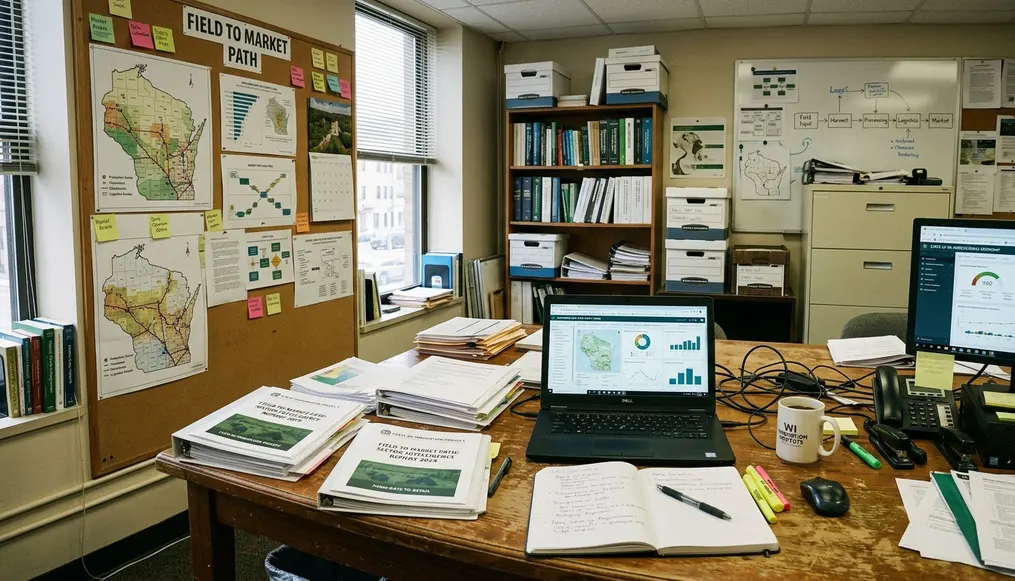
The trade-off is discipline. A narrow specification may feel limiting, but it helps the first buyer understand fit. A broad claim may sound attractive and still leave everyone unsure how to use the product.
Validate Buyers, Channels, and First Revenue Paths
Early customer work should not begin with a booth banner. It should begin with segmentation.
The first buyer might be a poultry producer, integrator, ethanol processor, ingredient buyer, turfgrass manager, dairy producer, or specialty crop operator. Those groups do not buy the same way. They do not carry the same risk. They do not attend an event with the same objections in mind.
Use events as listening posts
The International Poultry Expo segments of feed milling and live production offer one kind of validation channel. A poultry heat concept can be tested against people who understand house management, equipment uptime, feed conversion pressure, and integrator expectations.
The Georgia Young Farmers Association convention offers another kind of conversation. It can surface practical objections from producers who think in terms of labor, financing, repair, and weather. Georgia Holstein Association show activity may be more useful for dairy-facing ideas. The Southeastern Turfgrass Conference at the University of Georgia Tifton Campus can help turfgrass technologies meet managers who judge products by performance, timing, and maintenance burden.
Pro Tip: Treat events as field interviews. Ask what the buyer would stop doing if your product worked, what they would compare it against, and who would need to approve the purchase.
Events are not just promotional stops. They are places to test objections, identify channel partners, observe competing solutions, and recruit pilots. Sometimes the most useful answer is not enthusiasm. It is a precise objection from someone who knows the job.
Prepare Regulatory, IP, and Funding Readiness Early
Commercial readiness has a paper trail.
Animal housing equipment, fuels, food and beverage products, bioenergy inputs, and agricultural chemicals may all face different review obligations. I would not treat those paths as interchangeable. A heating system, a grain-based beverage, and a crop input each raise different questions about safety, labeling, claims, and use conditions.
Ask the IP questions before the product has momentum
- Who owns the underlying technology?
- Are there university licensing rights to resolve?
- Will publication timing affect patent strategy?
- What should remain as trade secret know-how?
- Who can access field data from pilots?
These questions can feel early until they are suddenly late. University-linked and partner-developed technologies need clear ownership and use rights before customer commitments become serious.
Funding follows milestones
Funding readiness should describe the next milestone, not just the size of the need. A sound plan separates prototype work, validation, pilot activity, manufacturing readiness, customer acquisition, and working capital. Those buckets tell funders what risk their capital is reducing.
For companies exploring federal non-dilutive pathways, the USDA NIFA SBIR/STTR programs are worth reviewing because they focus on research and development for small businesses in food and agriculture. The program fit still depends on the project scope and stage.
Run Pilots That Can Become Sales, Not Just Demonstrations
A demonstration shows that people will look. A commercialization-grade pilot shows whether a customer can buy.
The pilot should take place at a real customer site with agreed success criteria, a service protocol, a failure-response plan, and a post-pilot purchase discussion. I like that last item because it changes the tone. Everyone knows the pilot is not theater. It is a structured decision.
Document what a buyer will remember
For poultry-house heat, document installation time, operator feedback, fuel handling, maintenance interruptions, and compatibility with existing house management. The grower’s notes may matter as much as the instrument readings because the grower has to live with the product after the trial team leaves.
For sweet sorghum or bioenergy by-products, document feedstock logistics, processor feedback, seasonal constraints, and contract terms. A promising conversion result still has to fit harvest windows and delivery commitments.
End with the next commercial question
The best pilot ending is not applause. It is a clear next question: Who buys first, through which channel, with what service promise, and under what terms?
Georgia’s innovation economy grows when companies, universities, and public-sector partners work from the same playbook. In agribusiness, that playbook starts in the field but cannot stop there. It has to move through product specification, buyer validation, supply reliability, and practical service.
That is the path from a good trial to a product the market can trust.