Why Food and Agriculture Research Often Stalls Before Market
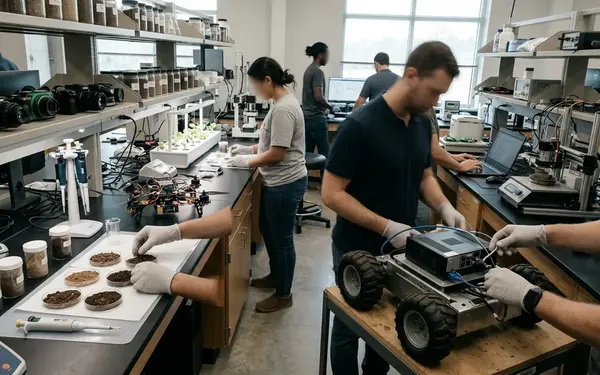
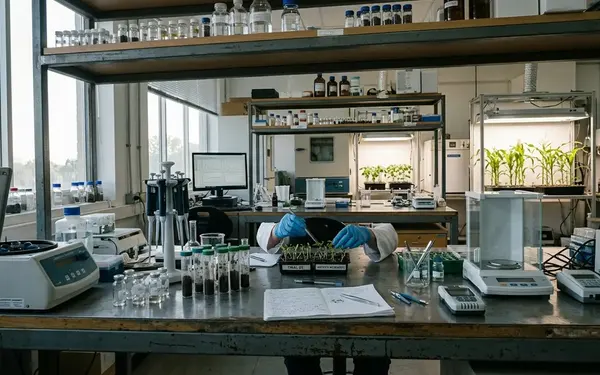
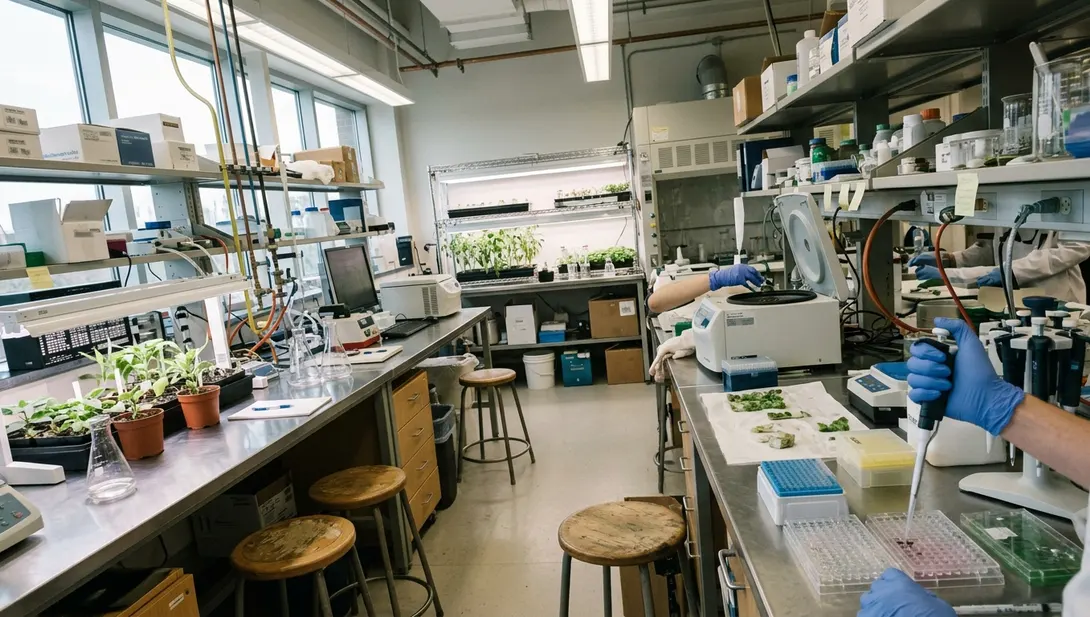
University labs turn out promising work in plant science, food safety, robotics, packaging, bio-based materials, irrigation, and animal health. I have seen the excitement around those discoveries. I have also seen how quickly that excitement cools when a grower asks, “Will this work in my field, with my labor, this season?”
That is the first-principles problem. A food or agriculture technology does not become useful because it is clever. It becomes useful when it survives heat, humidity, soil variation, wash-down procedures, buyer specifications, labor limits, and cost pressure.
Georgia agribusiness leaders operate in that world every day. Producers need tools that fit crop calendars. Food manufacturers need repeatable quality and clear food-safety fit. Logistics operators need cold-chain discipline. Input suppliers need evidence that a product performs under local conditions, not only in a controlled setting.
This article is not an argument for rushing science. Rigor matters. The practical question is whether translation pathways can be designed earlier, while the research is still flexible enough to meet a real operating problem.
The Georgia Context: Where Research Meets Production, Processing, and Logistics
Georgia is a useful testbed because the state contains many parts of the food and agriculture chain within practical reach of one another: working farms, food processors, ports, logistics networks, universities, and economic-development organizations. That proximity does not solve commercialization by itself, but it lowers the friction of asking better questions.
Take peanut quality as one example. The issue is not only yield. A useful research pathway may touch soil conditions, disease pressure, harvest timing, drying, storage, grading, processing, and buyer requirements. If the research team only sees the crop in the field, it may miss the point where value is lost after harvest.
The same pattern shows up in pecans, poultry and animal health systems, controlled-environment agriculture, cold-chain logistics, water efficiency, crop sensing, food processing automation, and shelf-life extension. Each use case has its own technical language. Each also has a commercial clock.
Land-grant and applied research institutions help connect these clocks through Extension, experiment stations, engineering labs, food science programs, and commercialization offices. Georgia Institute of Technology can contribute engineering depth. The Georgia Research Alliance (GRA) can help connect university discovery with entrepreneurial pathways. The Georgia Centers of Innovation can bring sector-specific economic-development context. The state’s practical playbook has been shaped over multiple administrations, including the period when Sonny Perdue served as Governor of Georgia, and it still depends on matching technical knowledge with business reality.
Research Capabilities That Can Change the Innovation Timeline
The strongest university contribution is not “research” in the abstract. It is the right capability aimed at the right constraint.
Matching capability to operating problem
- Breeding and genetics can support quality, resilience, and crop-specific performance targets when the market need is defined early.
- Microbiology and food safety can help processors evaluate contamination risk, sanitation fit, shelf-life behavior, and process changes.
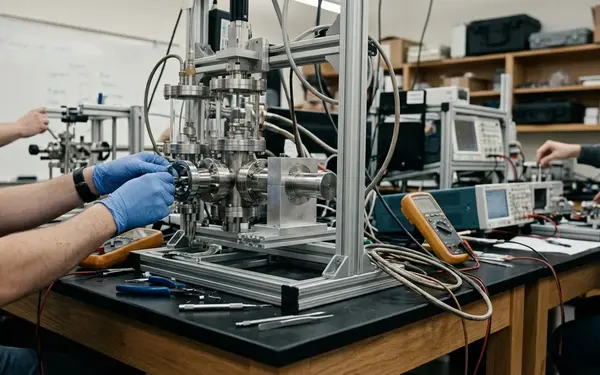
- Sensor systems and robotics can address labor constraints, inspection consistency, and field-level monitoring.
- AI-enabled decision tools can support forecasting, traceability, and management decisions, but only when the data inputs match farm or facility practice.
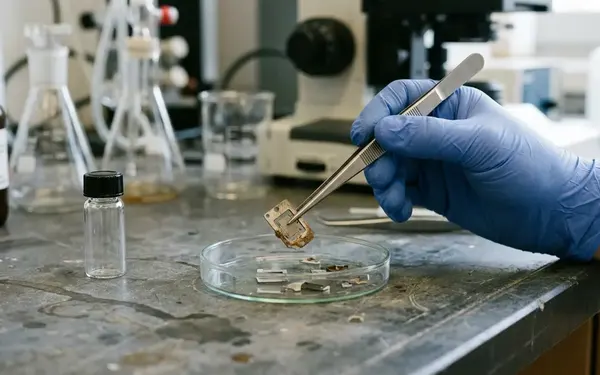
- Materials science can inform packaging, bio-based materials, coatings, and storage systems.
- Soil and water research can clarify the physical and biological conditions that drive yield response.
- Supply-chain analytics can expose where quality, time, and temperature losses accumulate.
I like interdisciplinary teams because they notice different risks. A crop scientist may ask whether a treatment response holds across rotations. A food scientist may focus on safety plans and shelf life. An engineer may spot a maintenance problem. An economist may question whether the value is large enough to change behavior. An Extension specialist may know whether the recommendation can be explained clearly in the field.
Key Takeaway: University capability shortens the innovation timeline only when it is tied to a specific operating constraint, such as spoilage, labor, quality control, water use, or traceability.
The Bottlenecks: IP, Validation, Regulation, and Adoption
The barriers that slow ag innovation after discovery are usually not mysterious. They are practical and recurring: unclear customer ownership, seasonal testing windows, limited pilot sites, intellectual property uncertainty, regulatory requirements, and weak business-model design.
For many Georgia row crops, useful seasonal testing may fit into roughly a four-to-six month window. A pilot site may need two to three growing cycles before a grower, processor, or investor trusts the result. That timeline feels slow to a startup founder. It feels normal to a farmer who has one main chance each year to learn.
Here is the kind of problem I watch for. A promising biological input performs well under a narrow test condition, then struggles commercially because no one tested it across the crop rotations that buyers actually use. The science may be interesting. The translation plan is thin.
Plain-language Bayh-Dole considerations
Bayh-Dole allows federally funded university inventions to move toward commercialization through institutional technology transfer processes. In practice, that means licensing terms, diligence requirements, sponsor obligations, and inventor participation need early attention. Diligence requirements can also vary by federal sponsor cycle, so the research team should not treat licensing as a formality at the end.
Regulation without legal guesswork
Food and agriculture technologies may touch food safety plans, FSMA-related practices, environmental rules, animal health protocols, labeling requirements, or data privacy expectations. A university team does not need to become a law firm. It does need to identify where regulatory fit may affect design, validation, documentation, or customer adoption.
Warning: Field performance data must match Georgia soil and weather patterns before broad commercialization claims carry much weight with local buyers.
Partnership Models That Move Research Into the Field
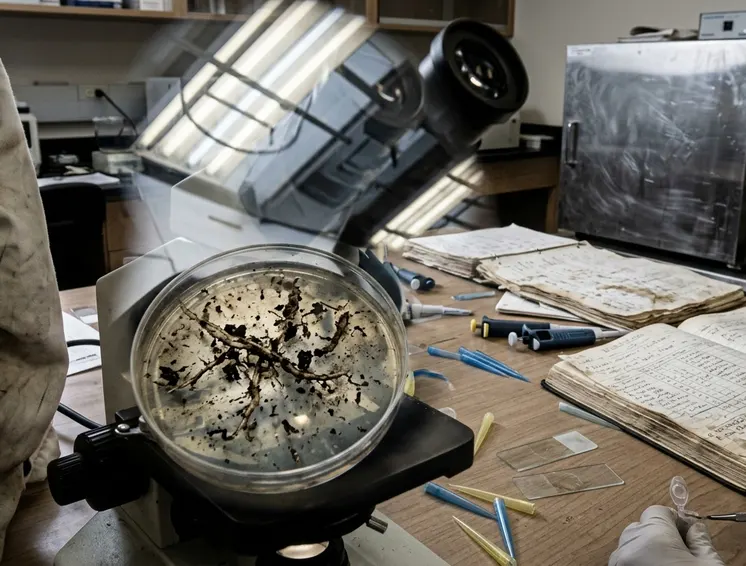
Partnership structure matters. A sponsored research agreement, an Extension demonstration, and a startup license are not interchangeable tools.
Choosing the right model
- Sponsored research works well when a company has a targeted technical question and needs university expertise to test it.
- Cooperative research agreements can help when both sides bring knowledge, materials, or facilities to a shared problem.
- Extension-led demonstrations are useful when practical usability, training, and field communication matter.
- Industry advisory boards help researchers hear recurring pain points before a project becomes too narrow.
- Grower pilot networks create operational evidence under real farm conditions.
- Processor validation sites test whether a technology fits throughput, sanitation, staffing, and buyer expectations.
- Student capstone projects can explore prototypes or decision tools when the risk is modest and the learning value is high.
- Startup licensing fits protectable university inventions that need a dedicated company to build, sell, and support the product.
NSF I-Corps is a useful customer-discovery framework because it pushes research teams to test assumptions before building a company around them. That discipline is especially valuable in agriculture, where the user, payer, influencer, and buyer may be different people.
The implication is simple: do not ask one partnership model to do every job.
A Practical Commercialization Playbook for University-Led Ag Innovation
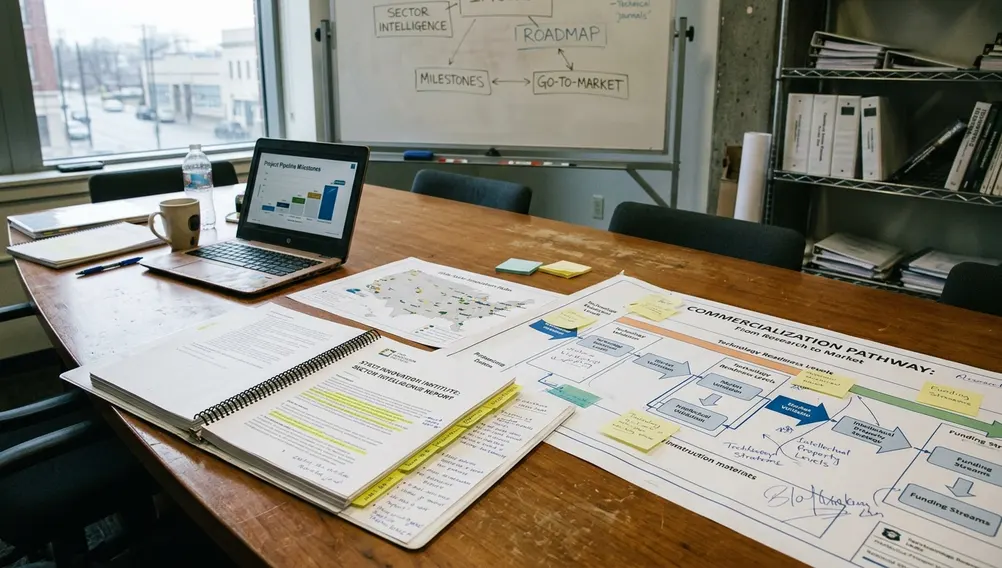
I use a stepwise playbook because it forces the hard questions into the open. It also keeps a research asset from being stretched into a business model it cannot support.
Step-by-step pathway
- Define the market problem. Start with cost, quality, risk, labor, sustainability, or market access. Avoid vague goals such as “improve agriculture.”
- Map the research asset. Identify whether the asset is a biological discovery, method, sensor, algorithm, material, process, or dataset.
- Identify field and regulatory constraints. Ask where seasonality, sanitation, environmental rules, animal health protocols, labeling, or data expectations may shape the design.
- Protect or publish strategically. Decide whether the work should move through patent review, trade-secret thinking, open publication, or Extension guidance.
- Recruit pilot partners. Select farms, processors, or logistics operators whose conditions match the intended market.
- Document performance. Capture usability, labor fit, equipment fit, repeatability, and value creation, not only technical function.
- Choose the commercialization route. Decide whether the solution is a product, service, data platform, licensing opportunity, cooperative tool, or public-good Extension resource.
Growers and processors do not need theatrical claims. They need proof that a technology works in their environment, fits their people and equipment, and creates enough value to justify adoption.
Pro Tip: Write the adoption evidence plan before the pilot begins. If the team waits until after harvest or production testing, it may miss the observations that matter most to the buyer.
Scope and Limitations: What University Research Can and Cannot Do Alone
Universities are powerful discovery partners. They are not substitutes for manufacturers, distributors, growers, processors, investors, or regulators.
Their best role is knowledge, talent, testing, and disciplined inquiry. They can help identify mechanisms, evaluate prototypes, train students, run demonstrations, and connect research questions to public and private needs. They can also slow a bad idea before it absorbs too much capital.
Not every research result should become a startup or licensed product. Some outcomes belong in public guidance, Extension education, open methods, or additional basic research. That is not a lesser outcome. In agriculture, a well-timed Extension recommendation can create more practical value than a company formed around a narrow tool.
Because Georgia crops, soils, weather, and buyer specifications vary by commodity, university-linked commercialization still needs local validation before broad claims travel far.
An Action Agenda for Georgia Agribusiness Leaders
For companies, the first move is to create a ranked list of technical problems that affect cost, quality, risk, labor, sustainability, or market access. Then translate those problems into research questions. “We need better quality control on this line” is a start. “We need to detect this defect before packaging without slowing throughput” is more useful.
For researchers, build industry feedback loops before the grant proposal, prototype, or publication is complete. Ask growers what they would stop doing if the new tool worked. Ask processors where downtime occurs. Ask logistics operators which temperature excursions matter most. Ask input suppliers what proof their customers will accept.
For entrepreneurs, treat university research as an asset that still needs a customer, price, support model, and adoption path. For investors, look for evidence that the team understands seasonality and pilot design. For economic-development professionals, connect the right people early: university offices, Extension personnel, Georgia Centers of Innovation staff, GRA resources, manufacturers, processors, and field partners.
Georgia’s food and agriculture innovation economy grows when research does not sit apart from production. The work starts with first principles: define the biological or operational constraint, test it under real conditions, and choose the pathway that turns knowledge into usable value.
Academic Sources
- USDA National Institute of Food and Agriculture for federal context on agricultural research, Extension, and education programs.
- Bayh-Dole Act commercialization pathways for federally funded university inventions and institutional technology transfer practices.
- NSF I-Corps customer-discovery model for helping research teams examine market assumptions before company formation.