
Logistics & Supply Chain
Freight technology, ports, RFID, transportation assets, and supply-chain modernization.
Explore logistics insight
Press ESC to close

We publish targeted intelligence and practical guidance that helps leaders move discoveries from lab and prototype stages into commercial reality across the state's highest-growth sectors.
Our working hypothesis is simple: the fastest route from research to market is rarely a straight handoff. A lab result may need customer discovery, manufacturability review, field validation, regulatory planning, or a different first buyer than the founder expected.

We look at market readiness through three practical questions. Can the technology solve a real operating problem? Can it be produced, delivered, or supported at the level the buyer expects? Can the team reach the right partners in Georgia before cost and timing drift?
That approach is useful, but it has limits. A life-sciences prototype, a port logistics tool, and an agribusiness sensor do not move through the same gate sequence. The better test is whether each project can identify its next credible buyer, partner, or validation site.
Commercialization is not a final step after research. It is a set of decisions that should shape technical development, partner selection, and capital planning from the beginning.
Georgia’s innovation economy is not one market. It is a set of sector corridors where research institutions, employers, infrastructure, and specialized talent meet.

That matters because a company building freight technology needs a different proof point than a clean-energy manufacturer or a biomedical startup. Field reporting confirms that the strongest projects usually connect early to the sector where adoption will actually happen.
Freight technology, ports, RFID, transportation assets, and supply-chain modernization.
Explore logistics insight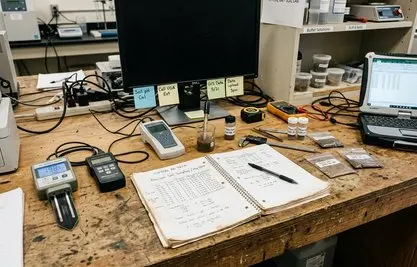
Precision farming, rural technology adoption, food systems, and agribusiness commercialization.
Explore agribusiness insight
Biomedical research, health technology, university commercialization, and clinical partnerships.
Explore life-sciences insight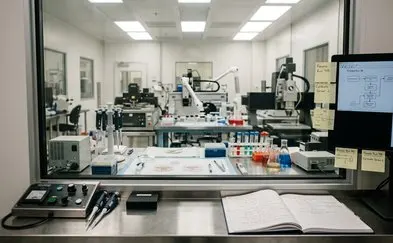
Automation, applied engineering, production technology, and workforce capability.
Explore manufacturing insight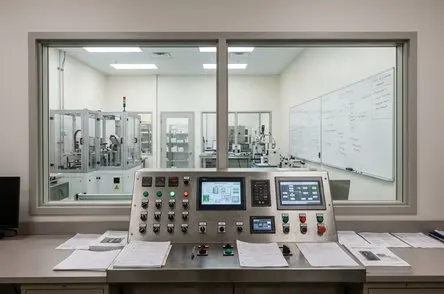
Clean energy, bioenergy, sustainable industry practices, and grid-related innovation.
Explore energy insight
Guidance for moving from prototype and research stages toward market readiness and investment.
Explore capital guidanceThe open question for every sector is not whether Georgia has assets. It is how quickly a team can turn those assets into a working relationship, a pilot, a first customer, or a fundable plan.
Founders and research teams already hear plenty of general advice: validate the market, protect the intellectual property, build the team, find capital. The gap shows up when those instructions have to become a Monday-morning work plan.
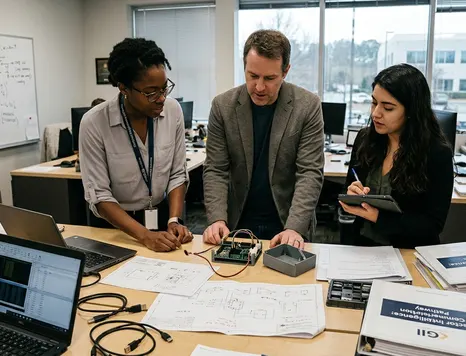
A useful commercialization plan names the next technical milestone, the next buyer conversation, the next partner dependency, and the next financing question. If one of those is vague, the project can look promising and still stall.
For Georgia technology entrepreneurs, that often means sequencing the work carefully. A university-originated health tool may need clinical insight before investor outreach. A manufacturing automation project may need a shop-floor readiness review before a vendor conversation. A clean-energy project may need site economics before a public announcement.
Use the commercialization roadmap when a project has moved past the idea stage but still needs clearer milestones before partner or investor meetings.
Capital planning fits the same pattern. The right funding source depends on the stage, risk profile, evidence, and buyer path. Our guide to venture capital and angel investing in Georgia is built for that conversation, not for a generic fundraising checklist.
Georgia Innovation publishes for people who have to make decisions: company leaders weighing a new technology, researchers preparing for commercialization, economic-development professionals matching assets to projects, and investors looking for grounded context.

Our editorial lens is practical. We focus on what can be tested, who needs to be involved, which constraints matter early, and where Georgia’s sector strengths can reduce friction. Not every recommendation will fit every company, especially in regulated or capital-intensive markets, but the goal is to make the next decision clearer.
The work draws on specialists across aerospace, logistics, life sciences, manufacturing, agribusiness, and energy. That mix matters because Georgia’s strongest opportunities often sit between sectors, not inside a single category.

Use the site to pressure-test commercialization assumptions, compare sector pathways, and prepare for better partner conversations.
Use the research areas to connect technical strengths with industry problems, regional assets, and market-readiness questions.




Find subjects that spark your curiosity.
Write thorough, well-sourced material.
Connect with readers seeking these answers.