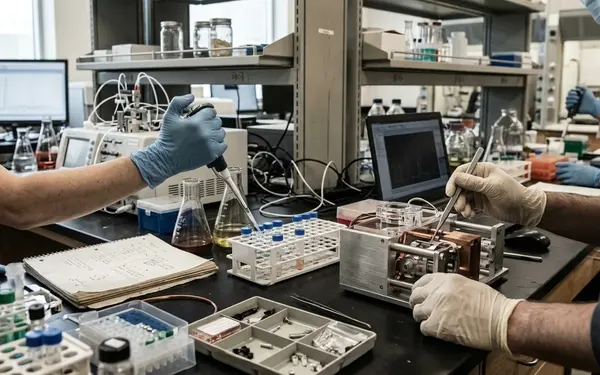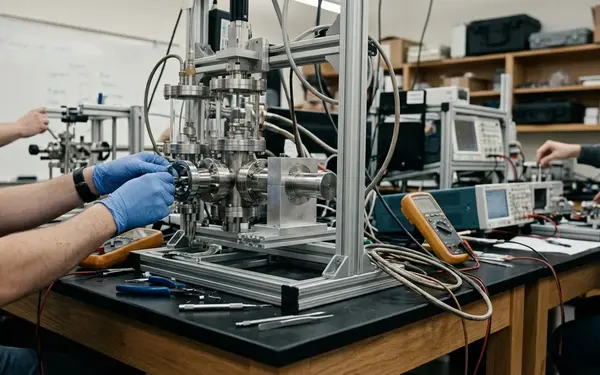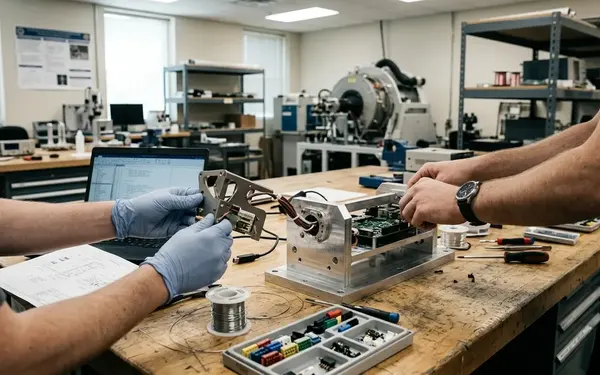
Here is the part of innovation that nobody puts on a brochure: a brilliant discovery sitting in a Georgia lab notebook has zero economic value until somebody moves it through validation, clinical relevance, regulatory planning, and commercial execution. The science is necessary. It is never sufficient.
I have watched founders fall in love with their data and assume the market will follow. It rarely does on its own. The gap between a publishable result and a product a hospital will buy is wide, and crossing it is the work most teams underestimate.
Why Georgia's Life-Sciences Opportunity Depends on Translation Capacity
Translation capacity is the quiet engine. It is the set of skills, relationships, and infrastructure that carries a finding from "interesting" to "reimbursable." Georgia is unusual in that several of the ingredients sit close together: research universities, large health systems, advanced manufacturing, freight and cold-chain logistics, and economic-development institutions that know how to convene people.
I want to be careful here. Proximity is not the same as a guarantee. Having assets in the same state does not mean they automatically connect for your specific company. What it does mean is that the connections are possible without leaving the region.
This article works across a deliberately broad scope: therapeutics, diagnostics, medical devices, digital health, public-health technologies, and the enabling services that support all of them. The principles travel across those categories even when the details do not.
The Georgia Assets That Matter Most for Commercialization
After looking closely at how discovery, clinical, manufacturing, and capital elements actually interact, I find it more useful to group assets by their function in the commercialization sequence than by the institution that owns them.
Discovery and clinical feedback
Georgia's university and health-system base supplies two distinct things: new inventions and clinical reality checks. Institutions like the Georgia Institute of Technology contribute engineering depth and research output. But institutional strength varies sharply by therapeutic area, technology type, and development stage. A program that is strong in medical devices may be thin in cell therapy. Match your need to the actual capability, not the reputation.
Public-health expertise
Atlanta's federal public-health presence is a genuine source of talent, subject-matter expertise, and partnership opportunities. It is not a venture-success machine. The value depends heavily on what you are building: federal public-health partnerships yield very different returns for a diagnostics company than for a digital health platform. Read the fit before you read the headline.
Manufacturing, logistics, and capital
Advanced manufacturing capability and Georgia's logistics infrastructure matter the moment you move past prototype. Capital networks and commercialization-support organizations such as the Georgia Centers of Innovation and the Georgia Research Alliance can help bridge specific gaps. Treat each as a tool for a defined stage, not a blanket endorsement of your idea.
From Research Finding to Market-Ready Life-Sciences Company
The commercialization sequence built from standard technology-transfer practice looks roughly like this:
- Invention disclosure
- Intellectual-property review
- Market-need assessment
- Regulatory classification
- Prototype or assay validation
- Evidence generation
- Manufacturing planning
- Customer discovery
These steps are not all the same flavor of company. A university spinout carries different obligations than an industry-sponsored research program, a licensed technology, a contract-research engagement, or a clinical collaboration. Knowing which model you are in changes who owns the IP and who controls the timeline.
The part that trips people up: these are not sequential lanes. Life-sciences commercialization runs parallel workstreams. Science risk, regulatory risk, clinical-adoption risk, reimbursement risk, and supply-chain risk all advance at once. R& D cost estimates referenced from a 2016 Journal of Health Economics analysis make the same point in dollars — the spend compounds, so unmanaged risk in one stream quietly inflates every other.
The science was sound. What sank the round was a reimbursement pathway nobody had mapped.
Clinical Insight: Where Product Strategy Becomes Real
Let me tell you about the most expensive mistake I see. A team builds a polished prototype, then takes it to clinicians for the first time, and discovers it does not fit the workflow at all. Spinout success collapses when clinical workflow validation is skipped before prototype spend. The fix costs more than the original build.
Clinician and patient workflow insight belongs before the expensive development milestones, not after. The questions are practical and unglamorous:
- Who actually uses the product?
- Where does it sit in care delivery?
- What does it replace?
- Which outcome genuinely matters to the user?
- And the one founders dodge: who pays?
Clinical collaborations also carry operating realities. IRB review, patient-privacy expectations, and data-use agreements are not paperwork to rush. They define what evidence you can legally generate and reuse. Get these wrong and your beautiful dataset becomes unusable.
Pro Tip: Shadow the end user for a day before you write a single product requirement. The gap between what clinicians say they do and what they actually do will reshape your roadmap.
Regulatory, Quality, and Manufacturing Readiness Cannot Wait
Regulatory strategy is a design input, not a final checkpoint. The pathway you target shapes product design, testing protocols, documentation, and the exact language of your claims. Decide late and you may have to rebuild.
At a high level, the FDA-relevant categories carry different evidence and quality expectations. Drugs and biologics, diagnostics, medical devices, and software-enabled products each demand their own approach. A software product faces a different quality burden than an injectable. Knowing your category early tells you what to document from day one. The FDA medical product development tools are a reasonable place to orient.
Quality systems, supplier documentation, design controls, lab validation, and scale-up planning are commercialization infrastructure, not afterthoughts. Build the quality habits while the company is small. Retrofitting them onto a chaotic process during a financing crunch is miserable, and partners can smell the disorder.
Warning: Claims language written before regulatory classification is set is one of the costliest reworks in early-stage life sciences. Lock the pathway, then write the marketing.
Partnerships, Funding, and Market Entry in a Georgia Context
The partner map for a Georgia team usually includes university labs, hospital collaborators, contract research organizations, manufacturers, economic-development groups, corporate partners, and investors. Each enters at a different stage and wants a different thing.
Non-dilutive funding
Federal grant pathways such as SBIR and STTR can fund early development without giving up equity. I will say plainly: availability and success are not promised, and the process is competitive and slow. But the structure rewards disciplined teams, and milestone reviews aligned to SBIR/STTR cycles give you a natural rhythm for planning.
What partners actually look for
Across every partner type, the checklist rhymes: protected or protectable IP, credible technical milestones, genuine regulatory awareness, demonstrated clinical relevance, and a commercialization plan that survives a skeptical read. Show those and conversations get easier. Skip them and even friendly partners stall.
Scope and Limitations: What This Ecosystem View Does Not Prove
This is an ecosystem and commercialization analysis. It is not a ranking of Georgia against other states, and I am not claiming it is.
I have deliberately avoided figures on total jobs, investment volume, startup counts, clinical-trial counts, or success rates, because I do not have named primary sources for those here. Stating them would be guessing dressed as authority.
One honest caveat specific to this field: subsector timelines and capital requirements differ sharply, so a roadmap that fits a research-tool company can mislead a therapeutic-platform team. A diagnostics startup, a research tool, and a therapeutic platform face different capital needs, timelines, and regulatory obligations. Read this as a frame, then adjust for your subsector.
A Practical Commercialization Playbook for Georgia Life-Sciences Teams
If you do nothing else from this article, work through this checklist before you spend serious money:
- Define the unmet need in one sentence a clinician would agree with.
- Identify the end user, specifically.
- Document your IP status — owned, licensed, or pending.
- Classify your regulatory pathway.
- Validate the clinical workflow before prototype spend.
- Assess the reimbursement or purchasing route.
- Map manufacturing requirements at realistic scale.
- Identify your partnership gaps.
Favor milestone-based planning over broad ecosystem networking. Coffee meetings feel productive; cleared milestones move the company. Tie your work to concrete checkpoints and let the network respond to progress.
Finally, prepare partner-ready materials before you need them: a nonconfidential summary, an evidence table, your regulatory assumptions, a development-milestone plan, and a clear collaboration ask. When the right partner appears, you want to hand them something credible the same week, not three weeks later.
Key Takeaway: Georgia gives you the assets and the proximity. Translation capacity — disciplined, milestone-driven, clinically grounded, is what turns those assets into a company. That part is on you, and it is learnable.