Contents
- Why Aerospace Commercialization Is Different From General Tech Transfer
- The Georgia Aerospace Cluster: Assets That Shorten the Distance to Buyers
- The Readiness Gap Between a Promising Prototype and an Aerospace Product
- A Practical Pathway: From Applied Research to Qualified Aerospace Use Case
- How Cluster Proximity Improves Buyer Validation
- Certification, Standards, and Procurement: Where Commercial Plans Often Slow Down
- Scope and Limitations: What the Cluster Can and Cannot Do
- Commercialization Playbook for Georgia Aerospace Innovators
- Academic Sources
Why Aerospace Commercialization Is Different From General Tech Transfer
Aerospace technologies rarely leave the lab through a software-style launch path. A team cannot simply release, monitor user behavior, and patch the product next week if the product touches flight safety, maintenance decisions, aircraft structure, or mission readiness.
The constraint arrives early. Reliability, safety, materials traceability, buyer qualification, and certification expectations shape the commercialization timeline before the first serious customer meeting. I treat that sequence as the starting point, not as a late compliance exercise.
Applied technology in the aerospace context
In this article, applied aerospace technology means practical systems and components used in aerospace operations: avionics, advanced materials, autonomous systems, propulsion components, sensing systems, maintenance technologies, manufacturing tooling, and data systems. The shared feature is operational consequence. If the technology changes how an aircraft is built, flown, inspected, sustained, or documented, buyers will ask for evidence that fits the aerospace environment.
That is why Georgia matters. The state combines aerospace manufacturing, defense aviation, academic engineering, logistics infrastructure, and supplier capacity in one regional operating environment. A founder or research team can test assumptions against several parts of the value chain without leaving the state.
Key Takeaway: Aerospace commercialization starts with evidence discipline. The product story matters, but the buyer will look first for reliability, traceability, integration fit, and a credible path to qualification.
The Georgia Aerospace Cluster: Assets That Shorten the Distance to Buyers
A useful cluster map starts with function, not logos. I look for airframe activity, defense aviation sustainment, university research, supplier networks, airport and logistics capacity, and economic-development support. Each function answers a different commercialization question.
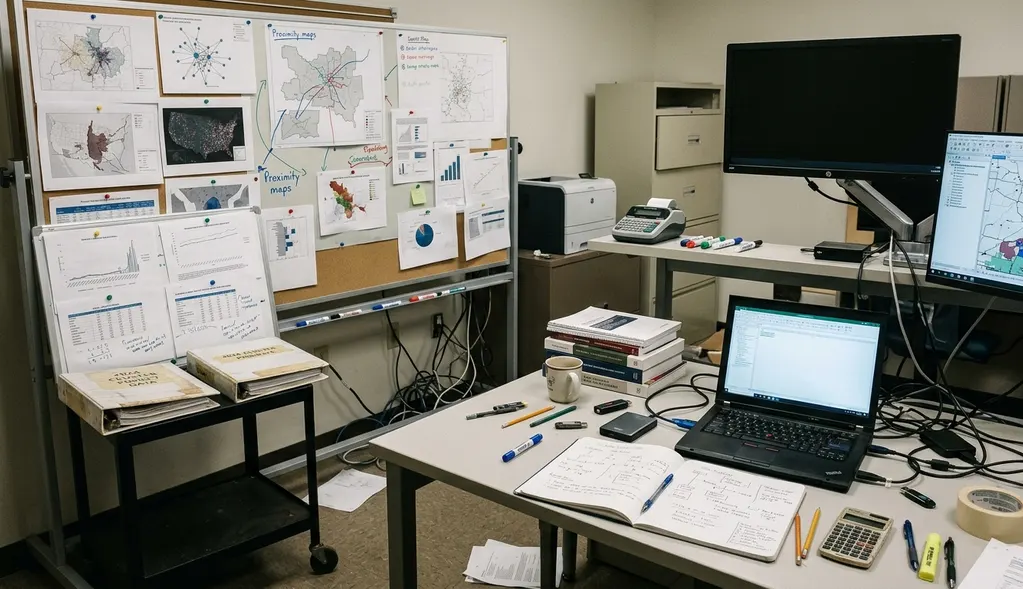
Regional assets as reference points
Gulfstream’s Savannah presence gives Georgia a business aviation manufacturing anchor. Lockheed Martin’s Marietta operations create a major aircraft production and modernization environment. Robins Air Force Base adds a defense sustainment and mission-readiness context. The Georgia Institute of Technology, often referred to in industry discussions as Georgia Tech, supplies engineering research and talent.
Those assets should not be described as guaranteed customers. They are better understood as commercialization reference points. A composite materials company can learn what production discipline looks like. A sensing startup can see how maintenance organizations think about false alarms. A software team can hear why integration burden often matters as much as interface elegance.
State support in context
The Georgia Centers of Innovation can help companies navigate sector-specific conversations. The Georgia Research Alliance (GRA) has supported university-linked research and commercialization activity over multiple years. During Sonny Perdue’s tenure as Governor of Georgia, aerospace and logistics were already part of the state’s broader economic-development vocabulary; today, those themes show up in a more mature supplier and research environment.
The practical value is compression of learning cycles. Not elimination of risk.
The Readiness Gap Between a Promising Prototype and an Aerospace Product
A lab prototype can demonstrate function and still remain far from an aerospace product. The gap usually sits in manufacturability, environmental testing, documentation, repeatability, cybersecurity review, maintainability, or buyer acceptance.
For flight hardware, the questions become concrete. Can the component survive vibration, thermal cycling, moisture, electromagnetic interference, and maintenance handling? Can the supplier prove configuration control and material traceability? If the answer is vague, the buyer hears risk.
Evidence before confidence
Flight-hardware programs may require vibration exposure testing across roughly 500 to 2000 hour ranges under MIL-STD-810 protocols, per published methodology. Thermal cycling may run between about -65 C and 150 C for 300 to 500 cycles before configuration freeze. Those ranges do not apply to every aerospace technology; they are most relevant when the prototype involves flight hardware rather than ground support equipment.
Skipping material traceability can lead to supply chain rejection even when the prototype performs well in a demonstration. That is the kind of disappointment I see when teams treat aerospace as a normal industrial market with stricter paperwork.
Warning: A university grant or federal research award can support discovery, prototype development, or technical feasibility. It does not automatically establish market readiness, production qualification, or buyer acceptance.
A Practical Pathway: From Applied Research to Qualified Aerospace Use Case
The pathway works best when it narrows early. “Better aerospace materials” is too broad. “A lighter inspection panel that fits existing maintenance routines and can document material traceability” gives the team something to test.
Step-by-step commercialization sequence
- Select the problem. Define the operational pain point: inspection time, component durability, predictive maintenance, lightweighting, or safer autonomous operations.
- Identify the buyer category. Separate airframe manufacturers, tier suppliers, maintenance organizations, airport operators, defense sustainment groups, and civil aviation users.
- Test technical feasibility. Use university labs, including resources connected to Georgia Tech where appropriate, to refine assumptions before the product story hardens.
- Refine the prototype. Bring in manufacturing suppliers for design-for-production input.
- Plan testing. Match tests to the actual environment, not to a generic readiness checklist.
- Assess manufacturing readiness. Document repeatability, inspection methods, supplier controls, and configuration management.
- Review compliance exposure. Identify certification, cybersecurity, export-control, and procurement issues before setting sales dates.
- Run a pilot deployment. Use airport, aviation-operator, or sustainment settings where the use case can be observed under realistic constraints.
- Prepare for procurement. Translate technical evidence into buyer language, including lifecycle cost, maintenance impact, and qualification route.
Where Georgia resources fit
University labs help with applied research and feasibility checks. Manufacturing suppliers can pressure-test tolerances, inspection steps, and production cost assumptions. Airport and aviation operators provide operational context. Defense and civil aviation stakeholders can clarify mission requirements, though their involvement should never be assumed without a defined engagement.
Customer discovery interviews can be scheduled in roughly 4 to 8 week blocks at regional airports and sustainment facilities. That cadence is long enough to hear recurring objections and short enough to prevent a team from building around imagined demand.
How Cluster Proximity Improves Buyer Validation
Aerospace customer discovery must go beyond general market interest. Buyers need to understand reliability, integration burden, lifecycle cost, maintenance impact, certification implications, and procurement fit.
Cluster proximity helps because weak assumptions surface earlier. A local engineer may challenge a thermal assumption. A supplier may point out an inspection step that breaks production flow. A sustainment professional may ask who owns the maintenance manual change.
One example: composite materials
Consider a composite materials startup. The material may be lighter and technically impressive, but the buyer will ask whether the part fits existing inspection routines. If it requires unfamiliar inspection equipment, new technician training, or a different repair process, the adoption case changes.
That does not make the material unattractive. It changes the proof required. The team may need to show durability, repairability, inspection compatibility, and supply continuity before the weight-saving argument becomes persuasive.
Adjacent use cases behave differently
An avionics software team faces integration with existing systems, cybersecurity expectations, and certification exposure. A drone inspection company must account for airspace rules and facility procedures. A maintenance analytics tool may avoid flight-hardware testing but still needs data governance, workflow fit, and operator trust.
The implication is straightforward: proximity improves the questions. It does not make the answer easy.
Certification, Standards, and Procurement: Where Commercial Plans Often Slow Down
Civil aviation and defense pathways should be planned separately. They may overlap in engineering culture, but their evidence requirements, contracting routes, and review timelines can diverge sharply.
Civil aviation route
For aircraft materials, components, and safety-sensitive systems, FAA guidance can shape the development plan. Teams working with composite aircraft structure should review FAA Advisory Circular 20-107B on composite aircraft structure before committing to a commercialization timeline.
The key step is not memorizing every paragraph on day one. It is identifying which regulations, advisory circulars, material specifications, or industry standards may apply to the intended use case. A maintenance tool, a cabin component, and a structural material do not carry the same evidence burden.
Defense-adjacent route
Working near defense aviation demand can create opportunity. It can also introduce security, export controls, cybersecurity, contracting vehicles, and qualification requirements that materially affect speed and cost.
Robins Air Force Base and other defense sustainment contexts help innovators understand mission-readiness language. Still, access to a defense ecosystem is not the same as procurement readiness. The contracting route must be mapped with the same care as the engineering route.
Pro Tip: Build a compliance map before building a sales forecast. In aerospace, the slowest step is often the evidence package, not the first demonstration.
Scope and Limitations: What the Cluster Can and Cannot Do
Georgia’s aerospace cluster can improve access to talent, operational feedback, supplier insight, and commercialization partners. It cannot guarantee certification, procurement success, venture funding, or customer adoption.
This article evaluates commercialization conditions and practical pathways. It is not a formal ranking of Georgia against other aerospace states. References to Georgia Tech, major manufacturers, defense aviation, FAA guidance, and state economic-development resources are contextual signals, not proof that any specific startup will succeed.
For flight-critical hardware, local access narrows the questions rather than replaces formal evidence. That limitation matters because aerospace buyers do not buy regional enthusiasm; they buy documented performance, production confidence, and manageable risk.
Commercialization Playbook for Georgia Aerospace Innovators
The best playbook is plain enough to use in a working session. I would start with the following sequence and keep each answer tied to evidence.
Checklist for entrepreneurs and research teams
- Define the aerospace use case. Name the aircraft, facility, mission, or maintenance setting where the technology belongs.
- Identify the buyer category. Do not mix manufacturer, operator, maintainer, airport, and defense buyer requirements into one generic customer profile.
- Map compliance exposure. Determine whether FAA rules, industry standards, export controls, cybersecurity requirements, or procurement rules affect the path.
- Document technical evidence. Preserve test conditions, configuration history, material sources, and design changes.
- Validate manufacturing assumptions. Ask suppliers how the part, tool, or system would be produced, inspected, and repeated.
- Build a pilot plan. Define what the pilot must prove and what buyer decision it supports.
For university researchers
Translate research outcomes into industry language. Name the operational pain point, the integration environment, and the evidence still required for adoption. A paper may establish novelty; a buyer still needs to know whether the technology can survive the operating environment and fit the purchasing route.
For corporate and economic-development partners
Support commercialization with structured testbeds, supplier introductions, applied research agreements, and procurement education. Broad networking has value, but aerospace teams need sharper forums where assumptions can be challenged by people who understand qualification, sustainment, and production.
That is the real commercialization advantage Georgia can offer: not a shortcut, but a more disciplined path from applied research to aerospace use.