Contents
- Why Georgia’s Aerospace Talent Equation Is Changing
- From Job Titles to Aerospace Skill Stacks
- Technical Skills Georgia Aerospace Employers Should Prioritize
- The Nontechnical Capabilities That Reduce Aerospace Program Risk
- Where Georgia’s Education and Industry Pipeline Can Move Faster
- A 12- to 24-Month Workforce Innovation Roadmap
- Scope and Limitations of This Workforce Analysis
- What Makes Georgia’s Aerospace Workforce Opportunity Distinctive
- Academic Sources
Why Georgia’s Aerospace Talent Equation Is Changing
Georgia’s aerospace workforce problem is not simply that employers need more people. The harder issue is that the work itself has changed faster than many job descriptions.
In the same production program, a technician may touch manufacturing data, maintenance documentation, supplier quality notes, and software-enabled inspection tools. A planner may need enough technical fluency to understand why a tolerance problem at one work cell can ripple into delivery risk for a defense-related customer. A machinist may still need excellent hands, but those hands now work inside a digital, regulated, traceable production system.
That overlap matters in Georgia because the state’s aerospace ecosystem is not one kind of employer. It includes OEM suppliers, MRO operations, defense-related manufacturers, airport-adjacent logistics assets, advanced manufacturing firms, and university research partners such as the Georgia Institute of Technology. The Georgia Centers of Innovation and the Georgia Research Alliance also sit near this conversation because commercialization and workforce readiness now meet earlier in the technology cycle than they once did.
I frame the issue this way in employer discussions: the shortage language is useful only after the mismatch language is clear. If a company hires for an old title but runs a modern aerospace program, it will keep finding candidates who look close on paper and incomplete on the floor.
Key Takeaway: Georgia’s workforce advantage will come less from broad hiring volume and more from matching training to the hybrid technical, digital, and compliance work that aerospace programs now require.
From Job Titles to Aerospace Skill Stacks
Rigid titles cause mismatched hiring when hybrid digital and compliance tasks appear. That is the practical problem behind many aerospace recruiting conversations.
Consider the word “technician.” In one Georgia supplier, the role may mean fixture setup, production troubleshooting, and measurement discipline. In an MRO environment, it may mean diagnostics, avionics awareness, maintenance records, and FAA-aligned training expectations. In a research commercialization team, the same title may point toward prototype builds, systems thinking, and manufacturability feedback.
A title names the seat. A skill stack describes the work.
A practical aerospace skill stack
For Georgia aerospace employers, I would define the baseline stack in five parts:
- Core trade skill: machining, maintenance, inspection, assembly, repair, engineering analysis, or another primary craft.
- Digital tool fluency: comfort with equipment interfaces, manufacturing data, digital inspection records, engineering files, or maintenance systems.
- Compliance literacy: enough understanding of regulated aerospace work to know when a step, record, or approval cannot be improvised.
- Documentation discipline: consistent execution of travelers, inspection entries, change histories, corrective actions, and maintenance logs.
- Cross-functional communication: the ability to move a problem from production to quality, engineering, supply chain, or the customer without losing technical meaning.
The mix changes by employer type. A supplier may value CNC setup and metrology depth above avionics exposure. An MRO provider may value diagnostics and maintenance documentation above additive manufacturing readiness. A commercialization team connected to university research may value systems engineering judgment and manufacturability awareness before full-rate production habits.
The implication is direct: job postings, curriculum reviews, and training grants should describe stacks, not just titles.
Technical Skills Georgia Aerospace Employers Should Prioritize
A Georgia-specific skills map should start with business function. Department averages hide too much.
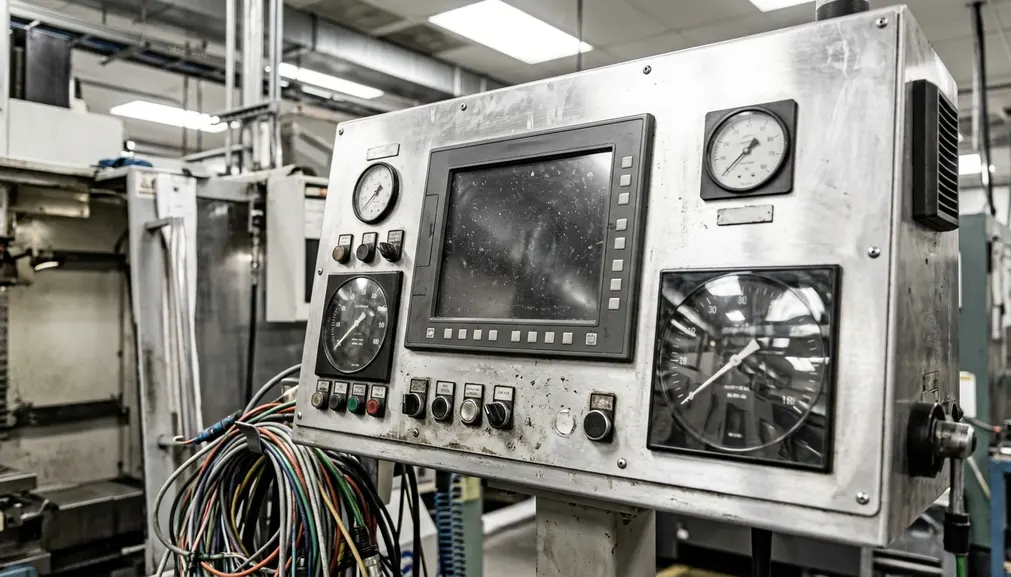
Training alignment succeeds only after mapping to actual work cells rather than department averages. A machining cell that supports tight-tolerance structures will not need the same training sequence as a repair station handling recurring aircraft maintenance tasks. A lab moving a prototype toward production will not need the same first-year priorities as a mature supplier trying to reduce scrap and rework.
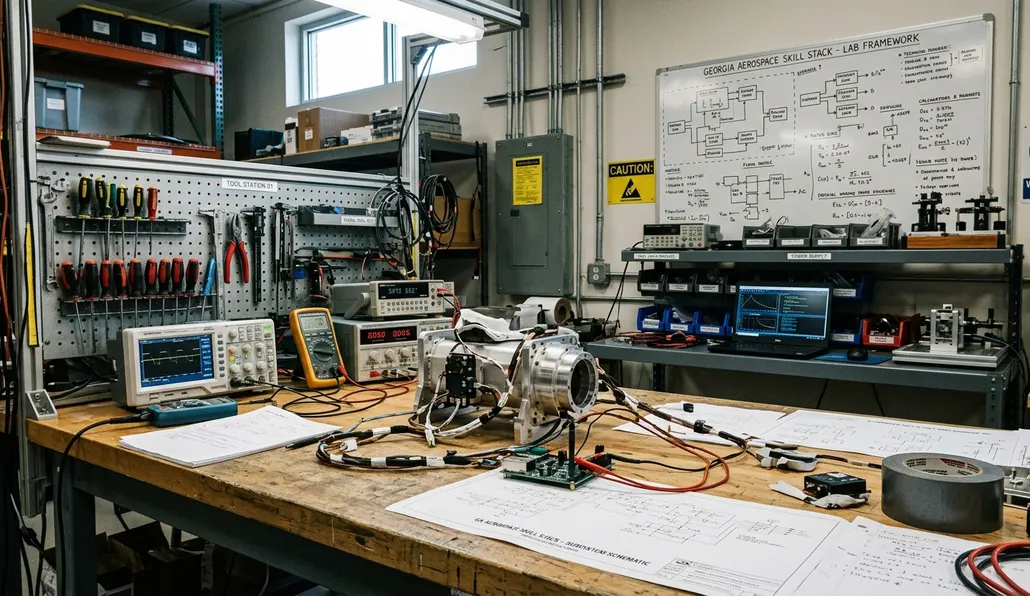
Advanced manufacturing
Advanced manufacturing skills should include CNC setup, multi-axis machining awareness, fixture design, GD& T, CMM operation, tolerance interpretation, and production troubleshooting. Additive manufacturing readiness also belongs here, but I would treat it carefully. Not every aerospace operation needs additive production capacity immediately; many need enough literacy to evaluate where additive tooling, prototyping, or repair support may fit.
The controlled comparison is simple. A general machining curriculum can produce useful entry-level capability. A work-cell-specific curriculum that includes actual fixture constraints, inspection routines, and tolerance decisions prepares a worker for aerospace production judgment. The measured outcome is not a universal statistic; it is fewer avoidable handoffs, clearer escalation, and faster recognition of nonconforming work.
Composites and materials
Composites training requires patience. The skills include layup discipline, bonding, curing process awareness, repair judgment, contamination control, and familiarity with non-destructive testing. These are not abstract competencies. They show up in how a person handles material, protects a surface, reads a procedure, and decides when to stop work.
The edge case is important. A worker can be careful and still lack aerospace-grade documentation habits. A worker can understand a process and still miss contamination risk. Training should therefore combine hands-on repetition with inspection reasoning, not separate them into unrelated modules.
The Nontechnical Capabilities That Reduce Aerospace Program Risk
Aerospace programs often lose time at handoffs. Engineering, production, quality, suppliers, and customers may each understand their own task, yet the program still absorbs risk when information crosses the boundary poorly.
This is where workforce innovation becomes more than technical training. Documentation discipline can protect schedule, quality, and customer confidence. It can also expose weak process design.
Documentation discipline
Workers need to handle travelers, inspection records, maintenance logs, change histories, corrective actions, and controlled work instructions with care. These records are not clerical leftovers. They are part of the product’s evidence trail.
In an MRO setting, the record may matter as much as the repair. In a supplier setting, the inspection entry may determine whether a part moves, stops, or requires engineering review. In a commercialization setting, the build record may become the memory that allows a research prototype to mature into a repeatable process.
Quality culture
Quality culture means workers know how to raise a nonconformance, participate in root-cause analysis, respect first-article inspection, and understand quality-management expectations such as AS9100 where applicable. It does not mean every employee becomes a quality engineer.
That distinction matters. Overtraining everyone on standards language can create fatigue. Undertraining people on escalation points creates program risk. The useful middle path is role-specific quality literacy: what to check, what to record, when to stop, and whom to involve.
Warning: Do not treat documentation training as an onboarding formality. In aerospace work, weak records can turn a small production issue into a customer, regulatory, or contractual problem.
Where Georgia’s Education and Industry Pipeline Can Move Faster
Georgia has the pieces for a stronger aerospace talent pipeline: technical colleges, universities, employer-led training, apprenticeships, incumbent-worker upskilling, military-to-civilian transitions, and university-industry commercialization pathways.
The question is not whether those pieces exist. The question is whether they connect to the exact equipment, processes, and certification needs employers face.
Broad statements about innovation rarely help a training provider decide what to buy, what to teach, or what to assess. A better employer conversation sounds more concrete: this work cell uses this inspection routine; this product line sees these defect patterns; this aircraft system requires this documentation discipline; this equipment change will alter the entry-level skill floor next year.
That is where advisory boards can improve. Instead of reviewing only program descriptions, they should review actual work instructions, anonymized defect patterns, equipment changes, and emerging role requirements. Georgia employers do not need to expose proprietary details to make this useful. They do need to bring enough operational specificity for educators to adjust training in time.
Commercialization pathways
The Georgia Institute of Technology, the Georgia Research Alliance, and industry partners can help close the distance between laboratory promise and manufacturable aerospace capability. That role becomes especially valuable when a technology moves from demonstration toward supplier qualification, process control, and production planning.
Former Governor Sonny Perdue’s economic-development era helped place attention on statewide competitiveness and business recruitment. The current workforce challenge is narrower and more technical: can the state align people, equipment, and compliance expectations before a program reaches a hiring crisis?
Pro Tip: Ask employers to bring one real workflow into curriculum review. A single inspection traveler or maintenance record can reveal more training needs than a broad discussion of “aerospace jobs.”
A 12- to 24-Month Workforce Innovation Roadmap
A phased model gives Georgia aerospace firms and partners a practical way to move without pretending that every training need can be solved in one semester or one hiring cycle.
Phase 1: Inventory roles by competency
Start with a role-by-role skills inventory. Separate must-have competencies from trainable competencies. This step forces a useful discipline: employers must decide what a candidate must bring on day one and what the company, college, or partner can build after entry.
For example, a supplier may require baseline print-reading and measurement habits before hire, then train on specific fixtures and inspection routines. An MRO operation may require mechanical aptitude and disciplined record behavior, then build aircraft-system familiarity over time.
Phase 2: Map skills to work cells and program requirements
Next, map skills to work cells, product lines, aircraft systems, or program requirements. Avoid generic departments. “Manufacturing” is too broad. “Composite repair preparation,” “CMM inspection for machined brackets,” or “avionics troubleshooting documentation” gives educators and trainers something they can build around.
Phase 3: Build targeted pilots
Only after the first two steps should partners design pilots. A pilot might pair a technical college lab with employer-provided inspection examples. It might connect incumbent-worker training to a new machine tool. It might help a research team build manufacturability awareness before supplier engagement.
Phase 4: Review and adjust
The review should ask practical questions. Did trainees perform the target task with fewer avoidable escalations? Did supervisors see better documentation habits? Did quality teams receive clearer nonconformance descriptions? Did the training reduce confusion at the handoff point?
Some answers will be qualitative at first. That is acceptable. Precision should increase as the partnership matures.
Scope and Limitations of This Workforce Analysis
This article uses occupational, regulatory, and quality contexts to frame workforce decisions. The U.S. Bureau of Labor Statistics aerospace engineer occupational profile provides one occupational baseline. FAA Part 147 matters where aviation maintenance technician education is in scope. AS9100 quality expectations matter where aerospace quality-management systems apply.
Within this role-level skills lens, the analysis has limits. It is not a statewide employment forecast, a hiring quota, a wage analysis, or a prediction of exact aerospace job growth. Those questions require a different method.
Skill needs vary by employer type. Airframe structures, propulsion, avionics, unmanned systems, MRO operations, defense suppliers, and research commercialization teams do not need identical training plans. A standard template can help organize the conversation, but it should not replace employer-specific mapping.
The most important limitation is also the most useful planning rule: a workforce plan becomes credible only when it names the work closely enough for training design.
What Makes Georgia’s Aerospace Workforce Opportunity Distinctive
Georgia can compete by connecting workforce training to commercialization, supplier readiness, logistics capability, and advanced manufacturing adoption. That combination is the state-economic-development point.
This is not a generic aerospace skills list. It translates national aerospace workforce pressure into a Georgia implementation framework for employers, educators, and economic-development partners. The framework starts with the work, then moves to the skills, then to the training relationship.
The next advantage will come from coordination. Companies need to define skill demand earlier. Educators need access to real process signals, not just job titles. Public-private partners need to support targeted upskilling where equipment, compliance, and program requirements justify it.
Georgia’s aerospace ecosystem already has significant institutional range: major research capacity, technical training assets, logistics infrastructure, defense-adjacent activity, and manufacturing capability. The practical question now is whether those assets can operate from the same playbook when roles change.
That is the workforce innovation challenge I would watch most closely.